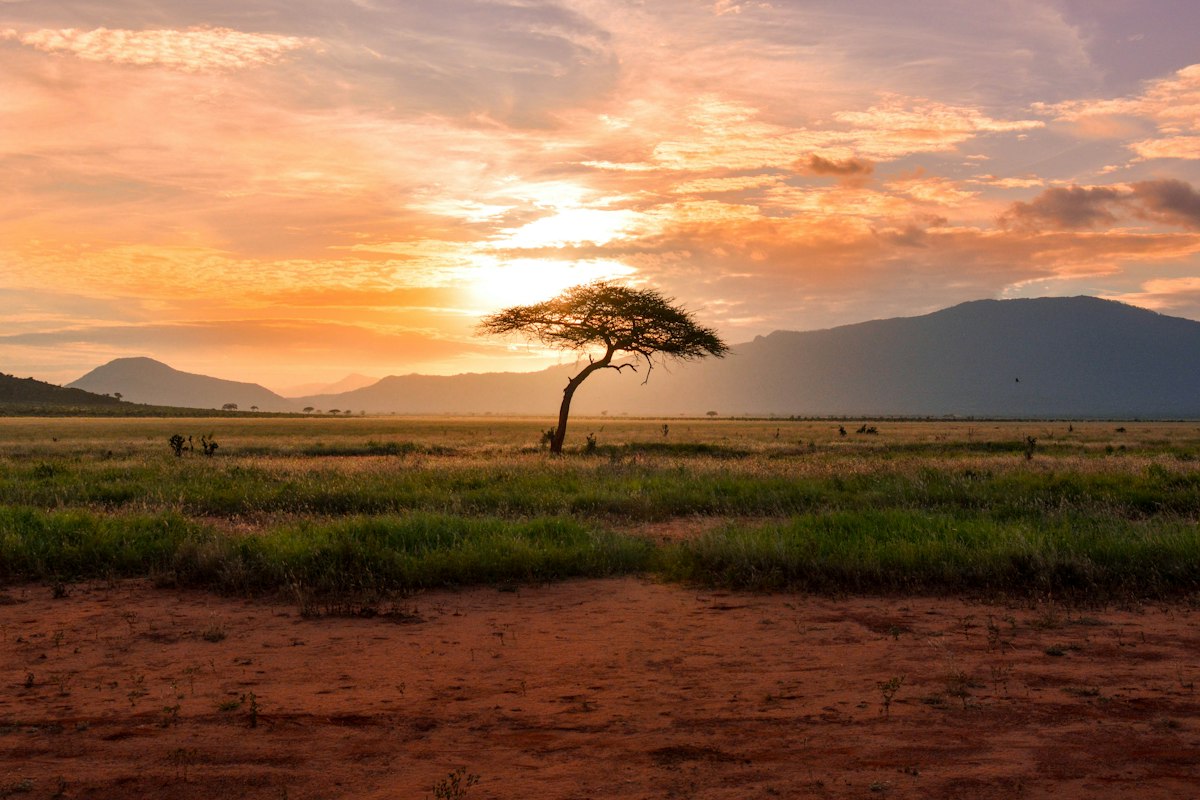
Masai Mara
📍 Kenya
☀️ Best: July–October (Great Migration) 💰 $200–600
<h2>Masai Mara: Africa's Greatest Wildlife Theatre</h2>
<p>The Masai Mara National Reserve in southwestern Kenya is where Africa's wildlife drama plays out most intensely and accessibly. The Mara ecosystem — 1,510 km² of protected reserve plus the surrounding conservancies — supports the highest density of large predators on earth: lion prides of 20–30 members, leopards in the riverine forest, cheetahs on the open grassland, and hyena clans that outnumber the lions. The Mara River crossing — when millions of wildebeest plunge through crocodile-filled water during the annual migration — is the most famous wildlife event on earth and is visible only here and in the adjacent Serengeti.</p>
<h2>The Great Migration</h2>
<p>The wildebeest migration is a year-round phenomenon — 1.5 million wildebeest (plus 200,000 zebra) circle continuously between the Serengeti's southern plains and the Masai Mara's northern grasslands, following rainfall and grass. The dramatic Mara River crossings — when the herd reaches a river crossing point and the chaos of crocodile ambush and drowning begins — are most likely to be witnessed between July and October. No crossing is guaranteed: guides with years of experience still miss crossings entirely. The rest of the year, the Mara offers exceptional game viewing even without the migration.</p>
<h2>Beyond the Migration</h2>
<p>The Mara Triangle (the western sector managed by the Mara Conservancy) generally has better roads, fewer vehicles and higher wildlife density than the main reserve. The private conservancies bordering the main reserve — Olare Motorogi, Naboisho, Mara North — allow off-road game drives, night drives and walking safaris that are prohibited in the national reserve. These activities dramatically increase wildlife encounter quality.</p>
<h2>Getting There from Australia</h2>
<p>Fly to Nairobi's Jomo Kenyatta International Airport (connections via Dubai, Doha, Addis Ababa, Singapore — 18–26 hours from Sydney). Fly from Nairobi's Wilson Airport to Masai Mara airstrips (45 minutes, AUD $200–400 return). No-visa required for Australians for 90 days (Kenya ETA required). Best time: July–October (migration crossings, dry season). June–October and January–February are best overall. Budget: AUD $400–1,200/day (all-inclusive safari lodges). <a href="/program/world-nomads">World Nomads Explorer</a> travel insurance. Malaria prophylaxis essential.</p>
Kenya is the world's greatest wildlife destination — the Great Migration, lions on the savannah, Mou…
Kenya is East Africa's premier safari destination. Australians need a simple eTA (USD $30 online). M…
The Masai Mara National Reserve in southwestern Kenya is where Africa's wildlife drama plays out most intensely and accessibly. The Mara ecosystem — 1,510 km² of protected reserve plus the surrounding conservancies — supports the highest density of large predators on earth: lion prides of 20–30 members, leopards in the riverine forest, cheetahs on the open grassland, and hyena clans that outnumber the lions. The Mara River crossing — when millions of wildebeest plunge through crocodile-filled water during the annual migration — is the most famous wildlife event on earth and is visible only here and in the adjacent Serengeti.
The wildebeest migration is a year-round phenomenon — 1.5 million wildebeest (plus 200,000 zebra) circle continuously between the Serengeti's southern plains and the Masai Mara's northern grasslands, following rainfall and grass. The dramatic Mara River crossings — when the herd reaches a river crossing point and the chaos of crocodile ambush and drowning begins — are most likely to be witnessed between July and October. No crossing is guaranteed: guides with years of experience still miss crossings entirely. The rest of the year, the Mara offers exceptional game viewing even without the migration.
The Mara Triangle (the western sector managed by the Mara Conservancy) generally has better roads, fewer vehicles and higher wildlife density than the main reserve. The private conservancies bordering the main reserve — Olare Motorogi, Naboisho, Mara North — allow off-road game drives, night drives and walking safaris that are prohibited in the national reserve. These activities dramatically increase wildlife encounter quality.
Fly to Nairobi's Jomo Kenyatta International Airport (connections via Dubai, Doha, Addis Ababa, Singapore — 18–26 hours from Sydney). Fly from Nairobi's Wilson Airport to Masai Mara airstrips (45 minutes, AUD $200–400 return). No-visa required for Australians for 90 days (Kenya ETA required). Best time: July–October (migration crossings, dry season). June–October and January–February are best overall. Budget: AUD $400–1,200/day (all-inclusive safari lodges). World Nomads Explorer travel insurance. Malaria prophylaxis essential.
July–October (Great Migration) is peak season — the wildebeest crossings at the Mara River typically peak August–September. This is the most expensive and most crowded time (vehicle concentration at crossing points can be extreme). Book camps 6–12 months ahead for July–September.
January–February and June: Excellent resident wildlife viewing with significantly fewer visitors and lower prices. The short rains (October–November) and long rains (March–May) bring fresh green landscapes and new young animals — some camps close during the long rains but the resident wildlife is still excellent.
The game drive rhythm: depart camp before 6am for the golden hour, return for breakfast at 9am, rest in the heat of midday (12–3pm), drive again from 4–7pm. Wildlife activity peaks in the early morning and late afternoon — midday drives in open vehicles are hot and relatively unproductive. Most camps include 2 game drives per day in their rates.
The crossings cannot be scheduled — they happen when the herd decides, sometimes waiting at the bank for hours before plunging. Your guide monitors radio communications between camps and drivers to locate gathering herds. When a crossing occurs, the chaos, noise, and animal emotion are overwhelming — one of the most powerful wildlife experiences available on earth.
Hot air balloon over the Mara at sunrise — silently drifting above lion prides, elephant herds, and the extraordinary golden light of the African dawn. AUD $600–800 per person (expensive but transformative). Landing is followed by a champagne bush breakfast in the field. Most camps can arrange; book ahead.
The semi-nomadic Maasai people have coexisted with the Mara's wildlife for centuries. A genuine (not performative) village visit — arranged through a reputable camp — provides insight into Maasai culture, cattle-herding traditions, and the complex relationship between conservation and indigenous land rights. AUD $30–50 per person; ensure fees go directly to the community.
The Masai Mara wildlife itself is the primary safety consideration — this is wild Africa. Always remain in the vehicle during game drives (do not stand up or extend limbs outside the vehicle), follow your guide's instructions absolutely, and never approach wildlife on foot without an armed and qualified guide. Malaria prophylaxis is strongly recommended (consult a travel medicine clinic before departure). Nairobi requires heightened urban awareness — stay in reputable areas, use hotel transport from the airport, and avoid walking after dark in the city.
Arrive in Nairobi. If time allows: the David Sheldrick Wildlife Trust (orphan elephant nursery, extraordinary, free morning viewing, AUD $5 donation) and the Giraffe Centre (AUD $20) are both excellent Nairobi morning activities. Fly to the Mara (30 minutes) or drive.
4 days in the reserve: morning and evening game drives, midday rest and camp time. Balloon safari on Day 4 or 5 (book ahead). Maasai village visit. Mara River crossing vigils (July–October). No itinerary can be specific — Africa operates on its own schedule and the extraordinary is always unexpected.
Final morning drive. Flight to Nairobi. Overnight or connect home.